




Blog / Huntington Beach Ford Service

Brake Maintenance on a Ford Edge Near Los Angeles
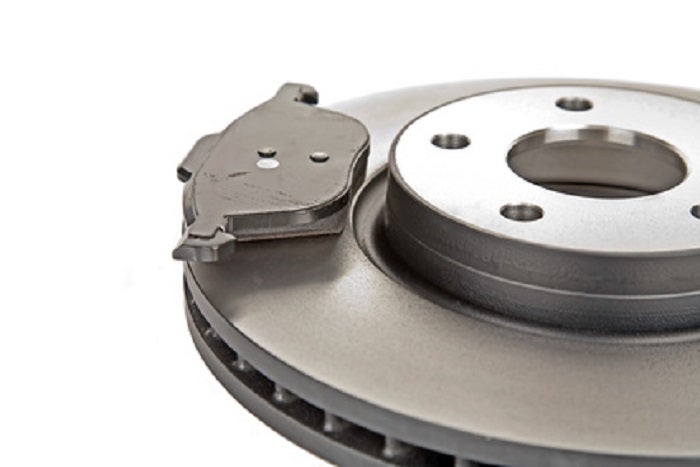
brake disk and one brake pad
Did you know that your brake components are made up of ceramic fibers, resin, and metal shavings? Each time you use your brakes, little pieces of your brake parts get shaved off. Over time, your brake pads, rotors, and calipers wear out. At Huntington Beach Ford near Los Angeles, we offer brake inspections, fluid checks, and other types of services to ensure that your Ford Edge stops every time. How do brakes on my Ford Edge work? All models of vehicles use a similar method of braking. Although the parts may differ slightly, they all function in the same way. Your Ford parts consist of:
  • Master brake cylinder
  • Brake fluid reservoir
  • Brake lines
  • Rotors
  • Brake pads
  • Calipers
Once you press your brake pedal, then a signal goes to your master brake cylinder. The cylinder then activates your calipers, which are located at each tire. The calipers move your brake pads and push them against the rotor. With compression, the rotor stops spinning. In return, your car stops moving. Throughout the process, your brake lines deliver brake fluid to your moving parts to ensure that everything turns and runs smoothly. How long do brakes last? You’ll find recommendations in your owner’s manual. Typically it’s suggested that you get a brake inspection every third oil change or at about 10,000 miles of use. But, if you spend a lot of time in stop-in-go traffic, then your brakes will wear out sooner. Brake service at Huntington Beach Ford Our team at Huntington Beach Ford is here to help you maintain your Ford Edge. If you are concerned about the life of your brakes or simply want an inspection to ease your mind, then stop by or schedule your appointment online.
Posted in:

Related Posts

Certified Car Service

Give Your Ford F-150 Quick Service near Cerritos, CA

Most drivers know that maintaining a Ford vehicle is vital for safety and longevity, but hectic lifestyles can make it challenging to schedule timely service. That’s why Huntington Beach Ford near Cerritos, CA wants to let you know about our Quick Lane® Tire and Auto Center. With more than 650 locations across the United States, Quick Lane® is the best way to keep your car, truck, or SUV up-to-date on scheduled maintenance and take care of minor repairs without disrupting your busy day. Name-Brand Tires and Ford Parts Tire rotations are important in extending the life of your tires, but eventually, you’ll need to replace them. Quick Lane® is your one-stop-shop for trusted tires from Goodyear®, Michelin, Continental Tire, Yokohama, BF Goodrich, and more. We’ll even mount and balance your new tires and only use genuine Ford parts as well. Regular Maintenance Whether you get an oil change, coolant system check, battery test, belt or hose replacement, or brake service, Quick Lube® Tire and Auto Center at Huntington Beach Ford can get your vehicle in and out in no time. There’s no need for an appointment at Quick Lube®, even during evenings and weekends. Not driving a Ford F-150? No worries; our expert technicians are highly trained and can service vehicles of any make or model. We only use manufacturer-recommended parts, so you're guaranteed quality and performance. Whether your car is new or a few years old, don’t overlook the importance of routine maintenance. Visit our Quick Lane® location for fast, reliable service, and while you’re at it, feel free to browse our lot at Huntington Beach Ford. We have a vast inventory of new Ford vehicles, like the 2019 Ford F-150. Come by and see us today!

6 Basic Car Maintenance Tips

If you plan on your car lasting you a lot longer than 100,000 miles, the key is maintenance. Little things like reading the owner’s manual to better understand what your car needs can help improve their shelf life by hundreds of thousands of miles. There is no such thing as too much maintenance. If you rotate your tires or get an oil change more frequently than normal, your car isn’t going to hate you for it. These are just some easy maintenance tips to help your car last far past its standard 100,000 miles. Get an Oil Change Every time you start your vehicle, you’re creating friction between all of the moving parts involved. This can prove deadly to your car’s lifespan. If you can eliminate this friction, you’ll have a smoother operation. This is why checking your oil levels often is critical in keeping your car in its best shape. Depending on your car’s owner’s manual, you should be changing the oil every 5,000 to 10,000 miles to ensure everything is properly lubricated. The oil levels in your Ford Edge in Costa Mesa help not only keep friction levels down in your car, but the oil is also a fluid that disperses some heat inside of your vehicle. An engine will run hotter with less oil in it to a point where you may blow the engine. This step hardly takes any time or great amounts of effort to complete this. In the long run, you’ll be grateful for completing this step regularly. Add Brake Fluid If you’re already checking your oil levels, you might as well check on the brake fluid. Brake fluid levels are important in saving your brake system from seizing up. Just as the oil helps lessen the friction of your car’s engine, the brake fluid lubricates the brake system in order for it to run smoothly. Constantly checking your brake fluids will allow you to stop easier and not have to replace your brakes as often as before. If the brake fluid is in between the minimum and maximum marks in the fluid reservoir, that is usually fine. Again, you should check with your owner’s manual to see where your brake fluid should be at. Replace Transmission Fluid Ensuring you have the right amount of transmission fluid in your car is an important part of cooling the transmission. This fluid also lubricates moving parts and smoothes the ongoing shifts between the gears. If you live in the city this could be a definite problem, as stop-and-go driving puts a lot of wear and tear on your transmission. If you want to keep your Ford Mustang in Costa Mesa at tip-top shape, you should check the fluid often. It’s recommended that you check the fluid level while the engine is running. In order to avoid any transmission failures, it’s critical to use the fluid recommended by the automaker. You should ask your dealership about what might be best for your car. Check Tire Pressures To get more miles out of your tire, checking the air pressure is key. This can also affect the comfort and handling of your car. With the amount of technology being released almost daily, there are now simple tools you can use to check your tire’s air pressure. It’s recommended that this be done on a weekly basis, but it won’t hurt if you do it more frequently than that. It’s also important to rotate your tires regularly. Tires can be super expensive, so you want to ensure they’ll last through multiple seasons. The owner’s manual will state how often the tires should be rotated. Replace Engine Air Filter For your engine to run properly, it needs to have the proper mixture of air and fuel. For this to happen, there needs to be a reasonable amount of air being sucked into your car’s engine. The engine air filter needs to be replaced regularly, so your engine will not contain debris. If you hear any odd sounds coming from the engine, this may be the problem. If you live in a city, there will most likely be more debris making their way into your vehicle than if you were to live in a rural area with open roads. Follow your vehicle manufacturer’s recommendations on how often the air filter should be replaced. Use Professional Detailing Supplies The interior and exterior of your car are what most people notice when they see your vehicle. This is why it’s important to make sure these areas look their best. Using superior detailing products over cheaper options will ensure a better shine that lasts longer. If you buy supplies from your Ford dealer in Costa Mesa, they will be able to show you the best prices, and may even give you a discount if you’re a returning customer. To check anything under the hood of your car, you should make sure to have your vehicle on a level surface to avoid any problems from occurring. This will also allow you to have the best view of what’s going on in there. Doing car maintenance can take a lot of time and planning in advance. There are several different apps that can now help you keep track of all your maintenance and send you notifications when it’s time to check something in your car. Using these apps along with your owner’s manual, you’ll be able to figure out a system that works best for you. This way, you’ll be able to stay on top of your car’s maintenance so it can last you for several years longer.

When Is It Time for New Tires? Key Warning Signs to Watch Out For

Understanding vehicle tires can sometimes seem a bit overwhelming. Not only do owners need to understand the warning signs that mean it is time for a tire change, but they also need to know the type of tire that is going to work best for their vehicle. This article will not only highlight some of the major signs that indicate that it is time for new tires, but also the different types of tires out there so that vehicle owners will know what type of tire is best suited to their vehicle and their needs. Seven Warning Signs That It Is Time for a Tire Change 1. Uneven Tread Wear When assessing the quality of a vehicle’s tires, the tread should always be one of the first places to look. Any signs of uneven tread wear can indicate that the tires are past their prime or in need of alignment so it is always important to keep an eye out for uneven wear and tear. Newer tires are sometimes equipped with handy technology called tread wear indicator bars that will give drivers a clear indication of when it is time for a tire change. These bars, which run generally run perpendicular to the regular tread pattern of the tire, will be invisible or almost invisible to the naked eye is the tires are new or in good condition. However, as the tires become worn, the bars will begin to make more and more of an appearance. If there are one or two bars clearly visible between the treads, it is more than likely time to take the vehicle in for new tires. 2. They Fail the Penny Test Even if tires aren’t equipped with tread wear indicators, there is a standard test that has evolved over the years to measure tread wear that will work on any tire. This test is generally referred to as the “penny test”, and it is so simple that anybody can do it. All the driver needs to do is take a penny and hold it so that Lincoln’s head is facing right side up then insert it into the tread of the tire in multiple locations. Ideally, the top of Lincoln’s head will be covered by the tread of the tire, but if not, this means that it has probably worn more than the required 2/32 of an inch that is recommended for safe driving and the vehicle is probably in need of a tire change pronto. 4. Unusual Bulges in the Sidewall The tread isn’t the only thing that drivers should be keeping an eye on when it comes to monitoring the quality of their tires. The sidewalls can also show telltale indications of tire wear. One of the key things to look out for is the appearance of usual bumps or bulges. This more than often than not means that a point of weakness has developed and the tire is at risk of blowing out. Anybody who notices this telltale sign should take their vehicle into a dealership as soon as possible to avoid causing a safety hazard. 5. Cracks on the Surface As a tire becomes worn, it will begin to develop cracks on the surface. These cracks will start out small, but eventually become more and more prominent. Once a crack becomes too large, it is likely to be the source of a potentially dangerous blowout, so if there are any cracks visible to the naked eye on either the tread or the sidewall it is time for a tire change. 6. Strange Vibrations All vehicles vibrate when they move, but any vibrations that are out of the ordinary are cause for concern, particularly if the driver notices they increase as the vehicle accelerates. Unusual vibrations can indicate lots of issues, including a mechanical problem, tire alignment issue, or a problem with the tires themselves, like a flat. Either way, all of these problems will eventually trickle down to negatively affect the tire, and are not only a safety hazard but can end up causing a vehicle owner big dollars if not addressed promptly. This is why if a driver detects any vibrations that don’t feel normal they should pull over and arrange to get the vehicle serviced right away. 7. Flats Flats happen, and often they can be fixed without needing to change out the entire tire. However, getting more than one flat on the same tire, especially within a short time period, is a clear indicator that there is probably an issue with the tire itself and it is time to get a new one. Types of Tires When it comes to buying tires, understanding the broad categories can help a buyer make the right decision as to what type of tire will work best for their vehicle and their needs. All-Season Tires These types of tires are a good go-to for anybody who isn’t sure what type of tire to buy since they generally work well on most types of tires and provide adequate performance and handling under most types of road conditions. All Terrain Tires These tires are designed to handle occasional off-road conditions while still providing adequate handling and performance for on-road driving. They can be a good choice for SUVs like a Ford Explorer in Costa Mesa that may occasionally be used for more rugged excursions. Performance Tires These tires will give a sporty car like a Ford Fiesta in Costa Mesa an added edge when it comes to performance, steering, handling, and acceleration. However, they are only ideal for dry driving conditions. Winter Tires These tires offer the best performance in ice and snow. Most vehicle owners will keep a set of these handy to switch on during colder winter months or for use on trips that entail winter driving conditions, then switch them off for when there is no snow and ice around. Mud Tires These tires are ideal for trucks or SUVs that will be driven frequently in off-road condition but will not handle as well for on-road driving.