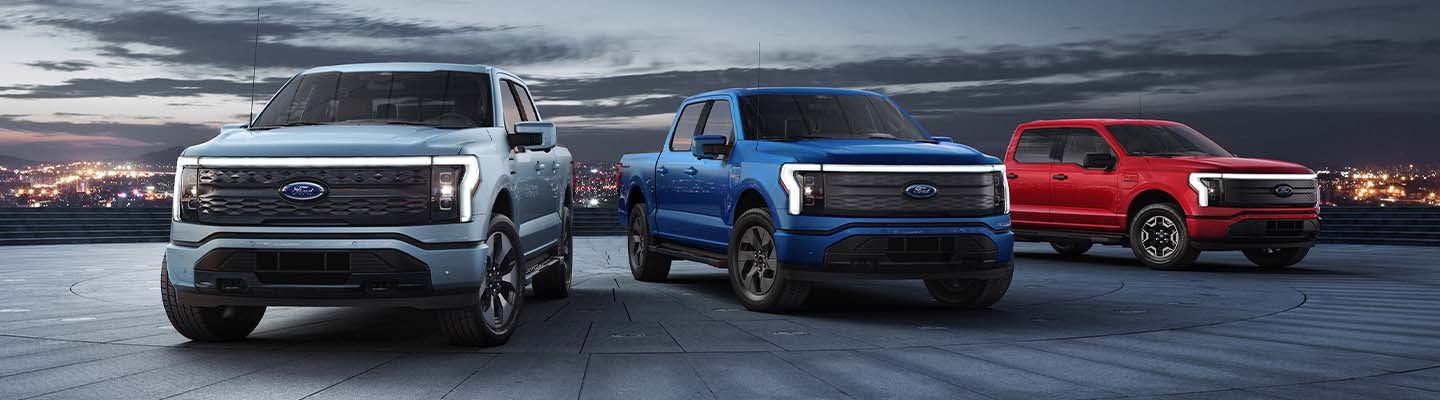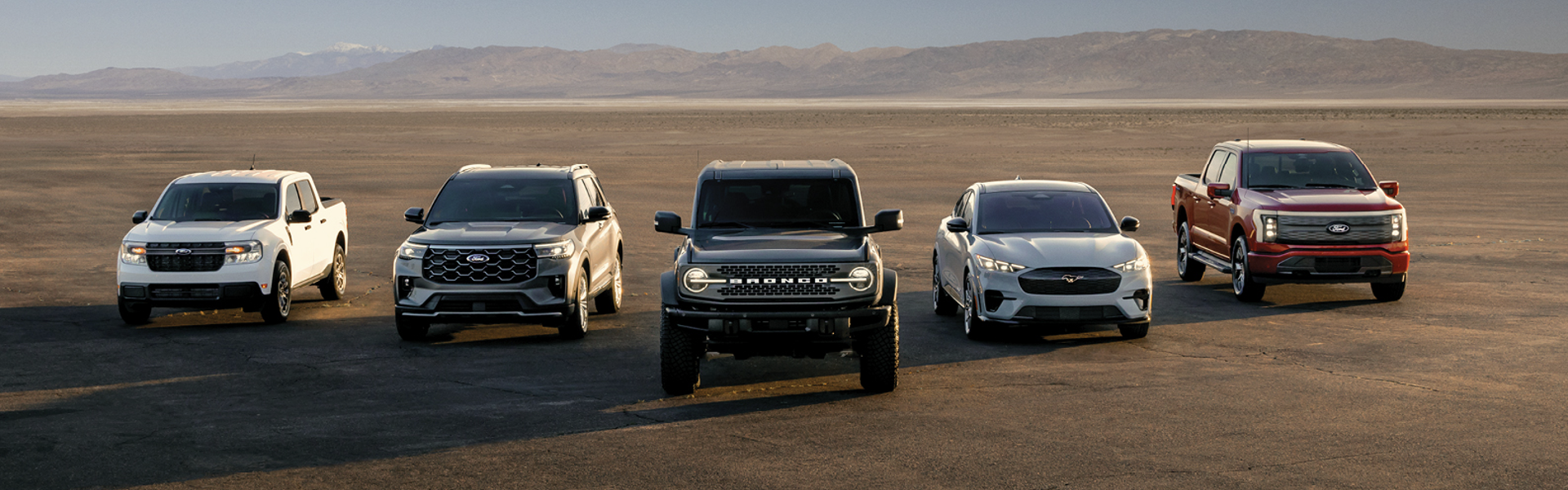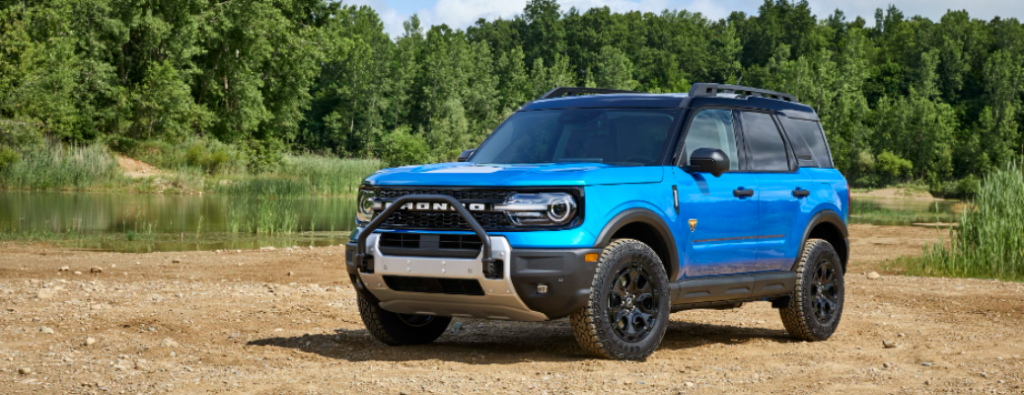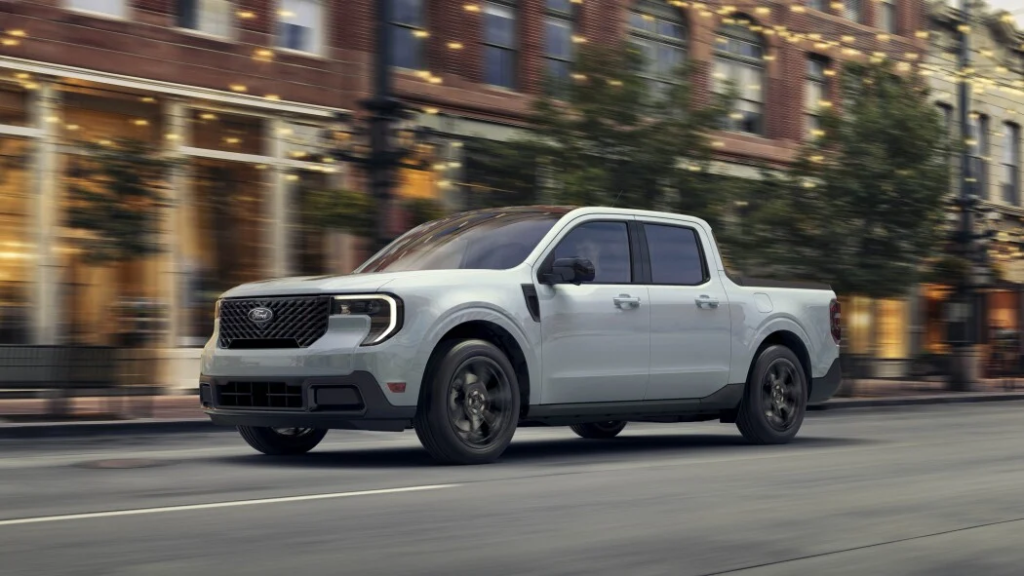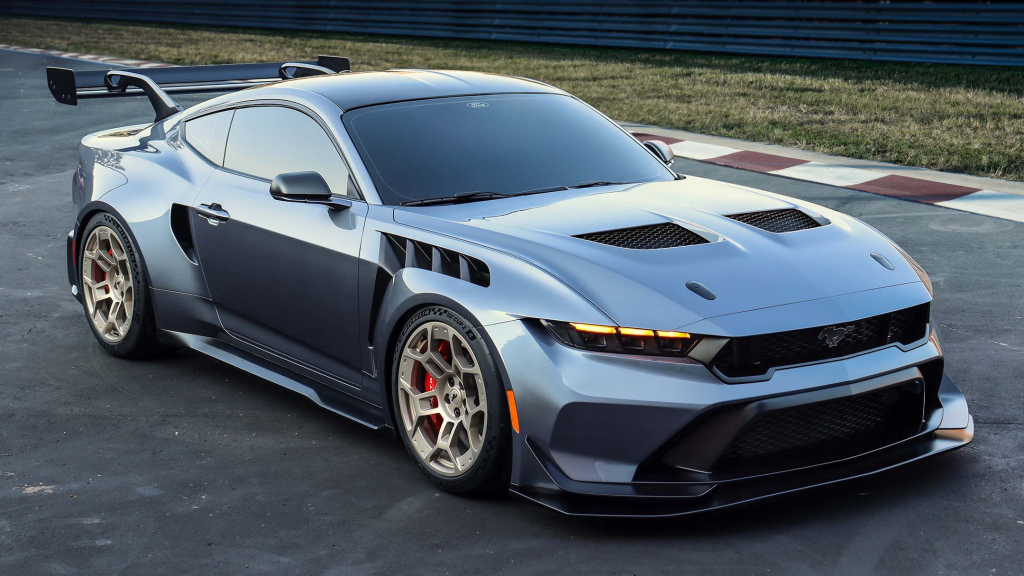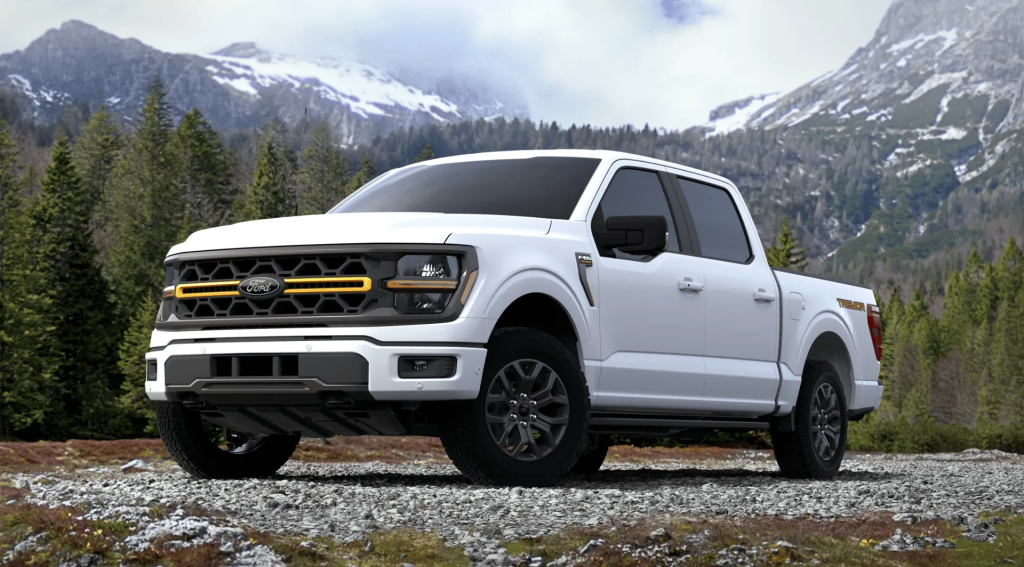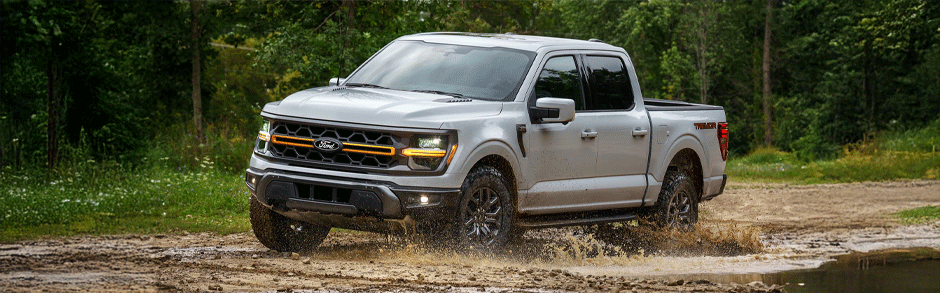



Orange County buyers have one of the widest Ford lineups available anywhere. Here's how to cut through it without overbuying — or undershooting what you actually need. 5 min read · Updated May 2026 Start with what you actually do — not what you might do someday The single biggest mistake Orange County car shoppers make is buying for a version of their life that rarely shows up. The person who tows their boat four times a year doesn't need a Super Duty; they need an F-150. The person whose "off-road adventures" are occasional dirt roads near Laguna doesn't need a full Bronco; they'd be better served by a Bronco Sport. Start with what you do every week, not what sounds most capable on paper. A few practical questions to ask before you browse inventory: How often do you genuinely tow or haul? How long is your garage? How many miles do you drive per year? The answers point you toward a category fairly quickly. Trucks: F-150, Super Duty, and Maverick The F-150 covers the vast majority of truck buyers in Orange County, offering strong towing capability when properly equipped and available hybrid power. The Super Duty F-250 and F-350 are for contractors, marine operators, and commercial fleet use. If you're considering a Super Duty primarily because it "looks tougher," the F-150 will serve you better on narrow beach streets and tight parking structures. The Maverick Hybrid is genuinely underrated: the 2026 standard hybrid powertrain has an EPA-estimated 42 mpg city rating, with crew-cab practicality and a footprint smaller than many SUVs. If you want truck utility for occasional cargo without the size or running costs, it's the smartest buy in the truck segment right now. SUVs: matching the right size to your life Ford's SUV lineup runs from compact to three-row, and the differences matter day to day. Model Best for Worth noting Explorer Families needing 3 rows and occasional towing Up to 5,000 lb towing capacity when properly equipped; ST performance trim available Bronco Buyers who will genuinely go off-road regularly Removable doors/roof; more rugged and truck-like than a typical city crossover Bronco Sport OC commuters who want weekend trail capability More manageable size than full Bronco; standard 4x4 Escape Solo or small families prioritizing fuel economy Available plug-in hybrid; easiest to park of the range Electric and hybrid — better economics in California than most states Orange County's short commutes and growing charging infrastructure make this one of the better places in the country to consider a Ford EV. Some local, utility, or income-based programs may be available depending on the buyer, vehicle, and timing. The Mustang Mach-E offers EPA-estimated range that varies by trim and battery configuration, with select extended-range versions exceeding 300 miles. The F-150 Lightning makes the case for truck buyers who want to electrify without sacrificing capability. Ask our finance team to review any currently available EV-related programs before purchase. Not ready to go fully electric? The F-150 PowerBoost Hybrid, Escape PHEV, and Maverick Hybrid all offer meaningful fuel savings with no charging dependency. Performance and Shelby The Mustang lineup runs from an accessible EcoBoost four-cylinder to the GT V8 and Dark Horse performance variant. As one of a small number of authorized Shelby American dealers in Southern California, we can sell, service, and authenticate Shelby vehicles with factory credentials. That authentication can matter for documentation, ownership history, and future resale — it's not something every Ford dealer can provide. Quick match guide Regular towing or work use → F-150 or Super Duty. Daily OC commuter → Escape, Explorer, or Bronco Sport. Ready for electric → Mustang Mach-E or F-150 Lightning. Trail weekends + city driving → Bronco or Bronco Sport. Performance or collector → Mustang or Shelby lineup. If you're still narrowing it down, give our sales team a call at 888-516-4195 — it's a faster conversation than most people expect, and we'll help you compare trims based on how you actually drive. Once you've picked a category, see our guide on what to expect on buying day and how to get the most from your trade-in.
How to Maximize Your Trade-In Value at Huntington Beach Ford
Huntington Beach Ford · Trade-In Advice 4 min read · Updated May 2026 What dealers actually look at during an appraisal When our appraisers evaluate your vehicle, they're working through the same criteria any serious buyer would. That includes mileage, condition, service history, and current market demand for that model in Southern California. That last point matters — a vehicle that moves well in Orange County may be worth more here than the same vehicle sitting on lots in other markets. Trucks and trail-capable SUVs often hold value well in this region. What they're not doing is nitpicking cosmetic details to manufacture a lower number. Minor wear on a 4-year-old daily driver is expected. What does move the needle — in both directions — is anything that affects the vehicle's ability to be retailed quickly: mechanical issues, accident history, missing service records, and extreme mileage for the year. Before you come in: what's worth doing You don't need to spend money preparing a trade-in. A few things take 30 minutes and cost nothing: Clean the interior thoroughly. A messy interior can make the vehicle feel less cared for even when it is mechanically sound. Vacuuming, wiping surfaces, and removing personal items makes a real difference to how an appraiser reads the car. Gather your service records. If you've had regular oil changes and maintenance done — even at a quick-lube shop — having the receipts helps document it. Missing service records may lead appraisers to evaluate condition more conservatively. Handle small, obvious items. A burned-out taillight or cracked wiper blade costs a few dollars. Leaving it in place can make the vehicle feel less cared for, because appraisers may mentally bundle small deferred items. Know your payoff amount. If you still have a loan, call your lender and get the exact payoff figure before your appointment. It speeds the process considerably. What not to bother with Don't pay for paint correction, new tires, or dealer-level detailing before trading in. The return on those costs is rarely positive at trade-in. Save that money for your new vehicle. For body damage or larger repairs, ask for an appraisal first before spending money — the return depends on the vehicle, damage, and market demand. Getting an estimate before you visit Our online trade-in tool is designed to give you a useful market-based starting point before an in-person appraisal. The final offer may adjust based on condition factors an online form can't fully capture. Either way, knowing your baseline before you arrive gives you a clearer picture of where the deal stands. Timing your trade-in Trade-in value isn't static. Model year changeovers, seasonal demand shifts, and fuel price movements can all affect what a used vehicle is worth in a given month. Trucks and large SUVs can soften when fuel prices rise, while hybrids and compact vehicles may see stronger demand. If your trade-in is a Maverick Hybrid or an Escape PHEV, stronger fuel-economy demand can work in your favor. For trucks, the inverse is sometimes true. The practical advice: if you're within 6 months of when you plan to buy a new vehicle anyway, don't overthink it. The difference in trade-in value between a "good" month and a "bad" month is usually smaller than buyers anticipate — and waiting costs you in depreciation on the vehicle you're holding. Trading in vs. selling privately A private sale may bring a higher sale price, while a trade-in can save time and simplify paperwork. In California, private sellers may also need to handle title transfer steps, smog-related requirements, and a DMV Notice of Transfer and Release of Liability. California tax treatment for trade-ins can differ from other states, so ask the finance team to walk through the numbers before deciding. Ready to get started? Value your trade online, or call our sales team at 888-516-4195 and we'll walk through it with you. When you're ready to move forward, see our guide on what to expect on buying day. More from Huntington Beach Ford Choosing the Right Ford Model: An Honest Category Guide What to Expect on Buying Day at Huntington Beach Ford Ford Service & Maintenance in Huntington Beach: What Every Owner Should Know Value Your Trade Get a market-based estimate for your current vehicle — online, in just a few minutes. Get Trade-In Value Get Pre-Approved New Inventory Browse current new Ford vehicles in stock at our Huntington Beach dealership. Search New Inventory Current Ford Specials Contact Us Sales 888-516-4195 Service 888-643-9988 Parts 888-377-3855 18255 Beach Blvd Huntington Beach, CA 92648 Get Directions